31 Aug 2026
Live scampi: freezing at -60 ºC to preserve the quality of the sea
Read more


The El Niño phenomenon is one of the main factors affecting fisheries and aquaculture along the Peruvian coast. The abnormal warming of the equatorial Pacific waters alters temperatures, ocean currents and rainfall patterns.
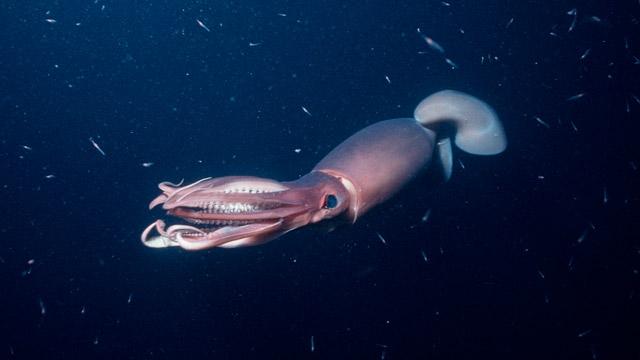
However, its impact varies depending on the species. In the case of the giant squid (Dosidicus gigas), high temperatures and oceanographic changes can alter its distribution and availability, while in the case of the Peruvian scallop (Argopecten purpuratus), environmental conditions can affect its farming conditions and survival.
For both species, monitoring sea and climate conditions is crucial to anticipating these changes and reducing their impact on the sector.
Giant Squid: Changes in Distribution and Availability
Increases in temperature and changes in ocean currents can affect where the giant squid is found and how it moves. This species may move to other areas, become more dispersed or be found at greater depths, reducing its presence and, consequently, its availability in traditional fishing grounds.
The difficulty in locating the resource can lead to more irregular catches and lower fleet performance, as vessels need to spend more time searching for the species, thereby increasing operating costs.
This situation may also affect the market by causing greater volatility in the availability of the species, as well as price fluctuations, with consequences throughout the supply chain, from producers themselves to processing and distribution companies.
Peruvian Scallop: Effects on Aquaculture in Sechura
For the Peruvian scallop, environmental conditions pose a real threat to farming activities and production. The main area at risk is Sechura, in northern Peru, which accounts for approximately 69% of Peruvian production.
Increases in temperature can affect the growth of the species and limit its ability to survive. In addition, if heavy rainfall occurs, it can cause freshwater to enter coastal areas.
These conditions can result in sudden changes in salinity, increased sedimentation in farming areas and lower oxygen levels in certain areas.
Taken together, these factors can increase the risk of mortality and reduced production, with a significant impact on producers.